

01 — Short answer
Which to choose — in short
Choose sea freight when the shipment is large or heavy and not urgent — it is clearly the cheapest way to move freight from China to Finland. Choose air freight when the shipment is urgent, valuable or light: it is the fastest but also the most expensive. For most import from China, sea freight is the default, and air freight is used when time matters more than money. In between sits SEA-AIR combined transport, which balances price and speed. Whichever mode fits, shipping from China to Finland needs the right freight choice from the start.
02 — Comparison
Sea vs. air freight — comparison table
The figures below are indicative and typical for the industry — the actual time and price depend on the route, season, shipping line and size of the shipment. Use the table as a guideline, not as a quote.
| Factor | Sea freight | Air freight |
|---|---|---|
| Transit time | Typically about 30–40 days port-to-port (+ customs and final delivery) | Typically about 5–10 days (+ customs and final delivery) |
| Cost | Cheapest, especially for large consignments | Pricier; worthwhile for small and urgent consignments |
| Best when | Large / heavy consignments, no rush, cost is the priority | Urgent, valuable or light shipments |
| Minimum quantity | LCL (part loads) typically from about 1 m³; FCL (container) for larger volumes | No container minimum; suits small consignments too |
| Charged by | Volume/weight, per m³ for LCL; per container for FCL | Volumetric (dimensional) weight |
| Risk / insurance | Longer transit time; cargo insurance recommended | Shorter exposure time; cargo insurance recommended |
| Environment (CO₂) | Lower emissions per tonne | Higher emissions per tonne |
Indicative — the actual time and price depend on the route, season and size of the shipment.
When to choose sea freight
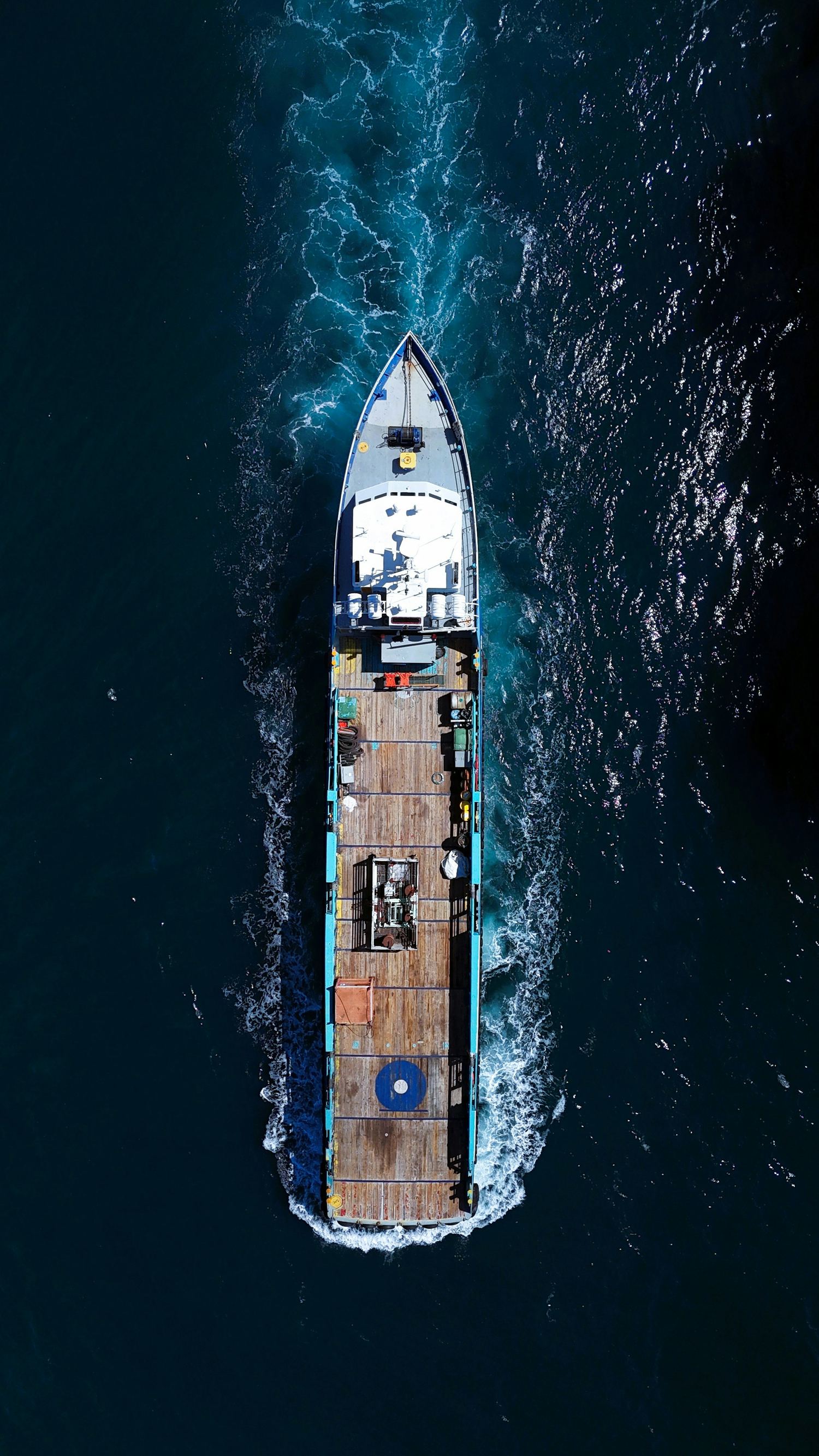
Sea freight is the default when cost decides and there is time to spare. It suits import from China to Finland when consignments are large or heavy and delivery is not urgent.
- Large or heavy consignments with plenty of volume and weight
- Low value-to-weight ratio — inexpensive goods imported in bulk
- No rush: delivery time is measured in weeks, not days
- Cost takes priority over speed
- FCL vs. LCL: a full container (FCL) for large consignments, a part load (LCL) for smaller ones — with LCL you pay only for the space you use
When to choose air freight
Air freight costs more but saves time. It pays off when the speed of delivery brings more value than the cost of the freight.
- Urgent deliveries where every day counts
- Valuable, light products where freight is only a small share of the value
- Small consignments for which a container would be oversized
- Seasonal peaks, when goods must be on the shelf in time
- Spare parts and critical components needed right away

05 — SEA-AIR
SEA-AIR — the sea-and-air hybrid
SEA-AIR combines the low cost of sea freight with the speed of air freight: the shipment travels part of the way by sea and the rest by air. This gives you a price closer to sea freight but a delivery time clearly shorter than sea freight. It is a good choice when pure air freight is too expensive and pure sea freight is too slow. Read more about combined transport.
06 — Dangerous goods
Dangerous goods: an important note
If your shipment contains dangerous goods, the choice of transport mode is different. Air freight is governed by the IATA Dangerous Goods Regulations (IATA DGR), which restrict or forbid the carriage by air of certain dangerous goods — for example some lithium batteries and certain hazard classes. For sea freight the rules (IMDG) are different, and many substances that are restricted in the air can be carried by sea when properly packed.
In practice this means that, for a DGR shipment, the mode of transport, packaging and documents must be planned together — not after the fact. Take a look at our DGR packing service if your shipment is classified as dangerous goods.
07 — Customs, EORI and Incoterms
Customs, EORI and Incoterms in brief
When you import goods from outside the EU, such as from China, the importer needs an EORI number for customs clearance. The Incoterms rule (for example EXW, FOB or DDP) determines who arranges the transport and clearance, and where responsibility and risk pass to the buyer. Your freight forwarder handles the actual customs clearance on your behalf and advises which delivery term suits your shipment.
We are happy to help with import forwarding and documents — get in touch or take a look at our services.
08 — How we help
How Lotrekka helps
We are a Helsinki-based freight forwarder. You get one point of contact who handles the freight, customs clearance and documents from China to Finland, from source to dock — by sea freight, air freight or a SEA-AIR combination. We compare the options for you and recommend the most sensible mode for your shipment.
09 — FAQ
Frequently asked questions
How long does sea freight take from China to Finland?
Sea freight from China to Finland typically takes around 30–40 days port-to-port, depending on the route, shipping line and season. On top of that come pickup, customs clearance and final delivery to the door, so the total time is in practice a little longer. These figures are indicative.
Is air freight worth it for a small shipment?
Often yes. Air freight is charged by volumetric weight, so it suits small, light and valuable shipments that need to arrive quickly. For large or heavy consignments air freight becomes expensive fast, and sea freight or SEA-AIR is usually the more economical option.
Can dangerous goods be sent by air freight?
Some can, some cannot. Air freight is governed by the IATA Dangerous Goods Regulations (IATA DGR), which restrict or forbid the carriage of certain dangerous goods by air — for example some lithium batteries and certain hazard classes. If your shipment is classified as dangerous goods, the mode of transport and packaging must be planned accordingly; the rules for sea freight are different.
What is SEA-AIR transport?
SEA-AIR is a combination of sea and air freight: the shipment travels part of the way by sea and the rest by air. This gives a price closer to sea freight but a delivery time clearly shorter than sea freight. SEA-AIR is a good middle option when pure air freight is too expensive and pure sea freight is too slow.
Do I need an EORI number to import from China?
Yes. When you import goods from outside the EU, such as from China, the importer needs an EORI number for customs clearance. The EORI number is applied for from Customs, and your freight forwarder handles the actual customs clearance on your behalf. The Incoterms rule (for example EXW, FOB or DDP) determines who arranges the transport and clearance.
Get in touch
Tell us what you need to import, and from where.
Send us your cargo details and destination — we compare sea freight, air freight and SEA-AIR and give you a delivery time and price. The right freight choice saves both time and money.